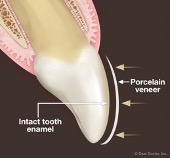
Veneers are thin coverings that are placed over the front (visible) part of the tooth. They look like natural teeth and give a more classically shaped look. For a more aesthetic smile Zirconium is frequently preferred (It is a texture-friendly white ceramic (porcelain) alloy): It offers a more natural and realistic appearance than metal-supported porcelain veneers. It is the closest treatment alternative to natural teeth with its light transmission and durability.
What is Dental Veneers ?
Veneers are thin coverings that are placed over the front (visible) part of the tooth. They look like natural teeth and give a more classically shaped look. For a more aesthetic smile Zirconium is frequently preferred (It is a texture-friendly white ceramic (porcelain) alloy): It offers a more natural and realistic appearance than metal-supported porcelain veneers. It is the closest treatment alternative to natural teeth with its light transmission and durability.
What Dental Veneers can treat ?
Dental veneers are a possible solution to help you achieve the look you desire. They are a popular choice for those with chipped teeth, a gap between teeth, or misshaped teeth. Veneers can be used to correct a wide range of dental issues, such as: • teeth that are stained and can’t be whitened by bleaching • chipped or worn teeth • crooked or misshapen teeth • uneven spaces or a large gap between the upper front teeth
Steps to place Dental Veneers
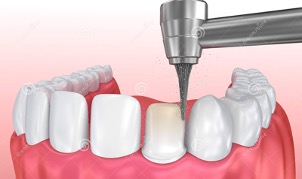
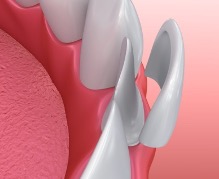
To prepare the teeth, the dentist usually removes a small amount of enamel from the front and sides of the teeth. This makes room for the veneers so that your teeth look natural. The dentist makes an impression, or mold, of the prepared teeth. The dentist also decides on the veneer shade that will be best for your smile. The impression is sent to a dental lab that custom-makes the porcelain veneers to fit your teeth. This may take several days. The dentist may give you temporary veneers to wear in the meantime. At the next visit, the dentist places the veneers on the teeth to check the fit and shape. After any adjustments, the teeth are cleaned and the veneers are bonded to the tooth.
Before you get veneers
• Your teeth and gums must be healthy before you get veneers. Your dentist can treat any disease or decay before your veneers are placed. • Veneers are not always a good choice for patients who clench or grind their teeth, because the thin veneers may chip or break. If you clench or grind your teeth, your dentist may suggest you wear a plastic dental night guard while sleeping. • Although your dentist removes as little tooth enamel as possible for veneers, the process cannot be undone once the enamel is removed. • It is possible for veneers to come loose over time. In that case, new ones might be needed. • As with all your dental care, discuss all your expectations and treatment options with your dentist. Regular dental visits are a must for keeping your teeth and gums healthy.
After you get veneers
• Veneers can chip or break under pressure. Avoid biting your fingernails and chewing on hard objects, such as pencils or ice. • It may take you a few days to get used to the feel of your veneers. But do let your dentist know if your bite does not feel right after the veneer has been placed. He or she will correct it before you leave the office. • Keep your teeth and gums clean by brushing and flossing each day. You can still get cavities under or around veneers.
Request Consultation