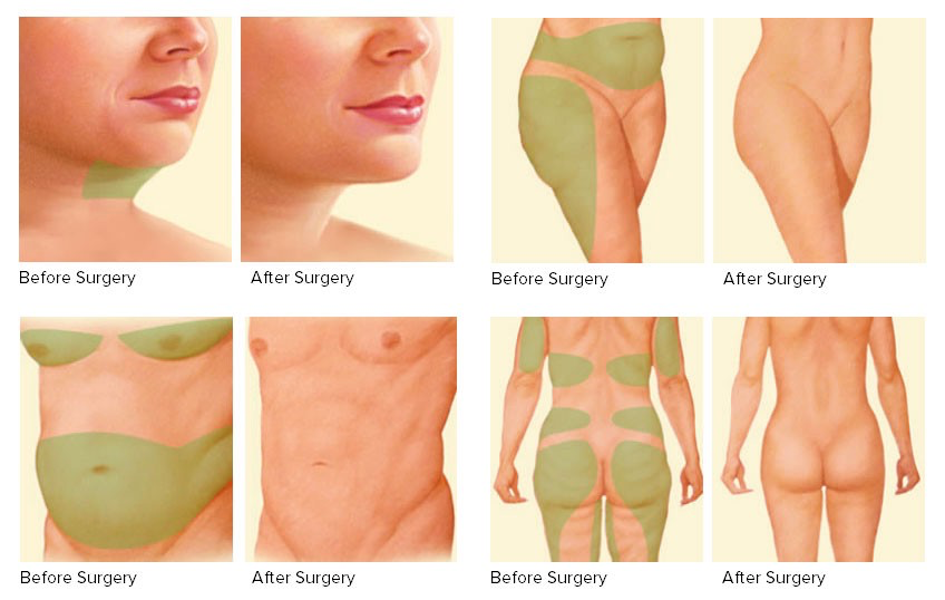
When Diet and Exercise give no result , the best way to get rid of the fat is Liposuction surgery. Using a suction technique to remove fat from specific areas of the body, Liposuction is a surgical and cosmetic procedure that improve your body contours, by sliming and reshaping specific areas (abdomen, hips, belly, thighs, buttocks, back, arms, and under the chin or face ... ) Liposuction can also be done with other plastic surgeries, including facelifts, breast reductions, and tummy tucks.
What is Liposuction?
When Diet and Exercise give no result , the best way to get rid of the fat is Liposuction surgery. Using a suction technique to remove fat from specific areas of the body, Liposuction is a surgical and cosmetic procedure that improve your body contours, by sliming and reshaping specific areas (abdomen, hips, belly, thighs, buttocks, back, arms, and under the chin or face ... ) Liposuction can also be done with other plastic surgeries, including facelifts, breast reductions, and tummy tucks.
Liposuction Process
Like all the surgeries, the procedure begins with the Anesthesia, your surgeon will recommend the best choice for you wether is general or local anesthesia depending on your case. First, diluted local anesthesia is infused to reduce bleeding and trauma. Then a thin hollow tube, or cannula, is inserted through the Incisions to loosen excess fat using a controlled back and forth motion. The dislodged fat is then Suctioned out of the body using a surgical vacuum or syringe attached to the cannula. Using laser energy has been shown to stop the normal functioning of fat cells and break them up. Moreover, results show that the laser’s energy stimulates the dermis and encourages collagen and elastic fiber production.
Reasons to Have Laser Lipolysis Fat Removal Surgery
Laser lipolysis (SlimLipo) is a very effective way of removing stubborn areas of fat (and fat cells) that remain despite dieting and exercise. More than removing fat, the basic principle of the procedure is the removal of fat cells. Moreover, the procedure also stimulates the production of collagen which obtains a more taught and youthful appearance.
Can everyone have a Liposuction ?
Candidates must be in good health. Lipo is not a solution for weight loss in cases of obesity. If you're overweight, you're likely to lose more weight through bariatric procedures — such as gastric bypass surgery — than you would with liposuction. You may be a candidate for liposuction if you have too much body fat in specific spots but otherwise have a stable body weight. One of the criteria of the ideal candidate is the skin’s characteristics. The younger the candidate, the better the results. It is usually necessary to undergo a tightening procedure on candidates who have poor skin elasticity after removing excess skin.
Instructions for better Liposuction Surgery
The following instructions are general information to be followed before and after a Liposuction procedure: Pre-Operation: Food and medications Before the procedure, discuss with your surgeon what to expect from the surgery. Your surgeon will review your medical history, and ask about any medical conditions you may have and any medications, supplements or herbs you may be taking. Your surgeon will recommend that you stop taking certain medications, such as blood thinners or, at least three weeks prior to surgery. You may also need to get certain lab tests before your procedure. Post-Operation: Arrange for someone to stay with you for at least the first night after the procedure. Avoid sports and intense physical activity for 3-4 weeks following the operation. You have to wear compression bandaging and the corset provided by the doctor for the specified period of time to allow your skin time to adapt to its new smoothness. Patients are advised to avoid salt, sugar and oils/fats while having a protein-based diet and drinking plenty of water after the operation to help reduce swelling more quickly. It is impossible for the removed fat cells to be replaced by the body, but the remaining fat cells can increase in volume. Patients are advised to exercise and to reduce food consumption to maintain the results of the procedure. You’ll probably also have to take some antibiotics to prevent infection. Most people can return to work within a few days and get back to normal activities within 2 weeks. But every person is different.
Average length of stay 7 Days Length of stay in hospital 1 Day Operation Duration 2 Hours Anesthesia General Anesthesia Recovery duration 1-2 Weeks
Request Consultation