Face-Lift (rhytidectomy) is a cosmetic surgical procedure to create a younger appearance in your face. The procedure can reduce the sagging or folds of skin on the cheeks and jawline and other changes in the shape of your face that occur with age. During a face-lift, a flap of skin on each side of the face is pulled back, and tissues below the skin are surgically altered to return the contour of the face to a more youthful shape. Before the flap is sutured closed, excess skin is removed.
What is Face Lift ?
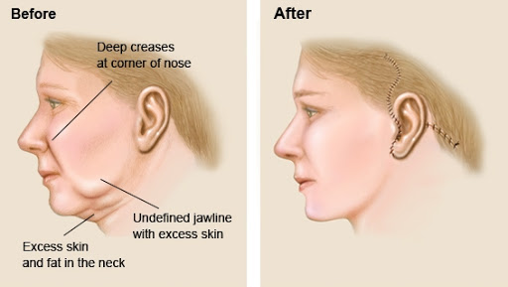
Face-Lift (rhytidectomy) is a cosmetic surgical procedure to create a younger appearance in your face. The procedure can reduce the sagging or folds of skin on the cheeks and jawline and other changes in the shape of your face that occur with age. During a face-lift, a flap of skin on each side of the face is pulled back, and tissues below the skin are surgically altered to return the contour of the face to a more youthful shape. Before the flap is sutured closed, excess skin is removed.
What can a Face Lift surgery do ?
As you get older, the appearance and shape of your face is altered because of normal age-related changes. Your skin becomes less elastic and looser, and fat deposits decrease in some areas of your face and increase in others. Age-related changes in your face that may be reduced with a face-lift include the following: ·Sagging appearance of your cheeks ·Excess skin at your lower jawline (jowls) ·Deepening of the fold of skin from the side of your nose to the corner of your mouth ·Sagging skin and excess fat in the neck (if the procedure includes a neck lift) A face-lift isn't a treatment for superficial wrinkles, sun damage, creases around the nose and upper lip, or irregularities in skin color.
Face Lift Process
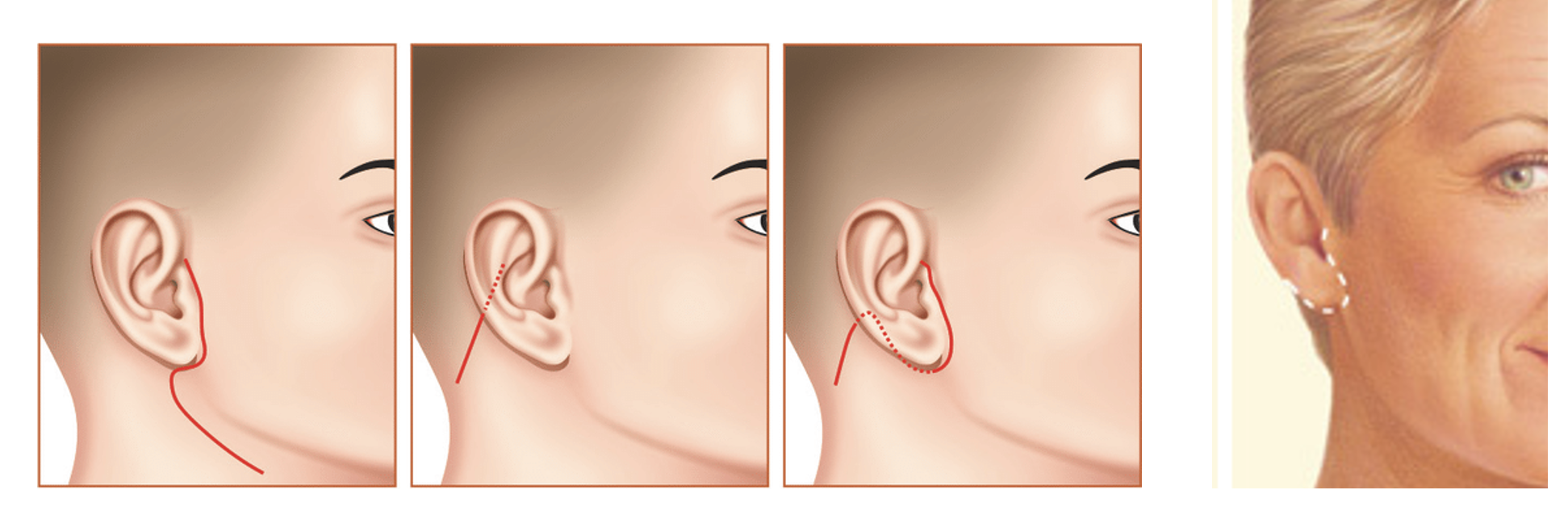
Like all the surgeries, the procedure begins with the Anesthesia, your surgeon will recommend the best choice for you wether is an intravenous sedation or general anesthesia depending on your case. Depending on the degree of change you'd like to see, your facelift choices include traditional or limited Incisions.
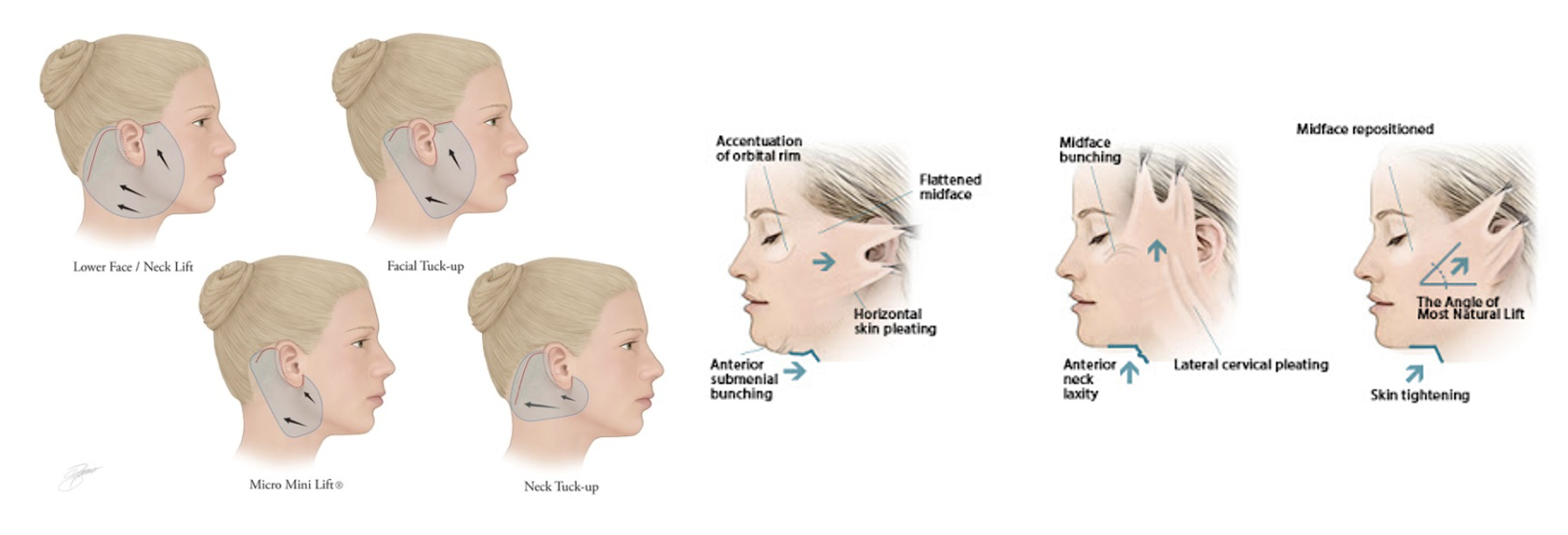
Lifting involves elevating the skin and tightening the underlying tissues and muscles. Fat in the face and neck may be sculpted, removed or redistributed.
Then we proceed to Closing the incisions . Facial skin is then re-draped over the newly repositioned contours of the face, excess skin is removed, and the wound is stitched or taped closed.
Can everyone have a Face Lift ?
In general, good candidates for a facelift include: •Healthy individuals who do not have medical conditions that impair healing •Nonsmokers •Individuals with a positive outlook and realistic expectations
What is an Endoscopic Facelift?
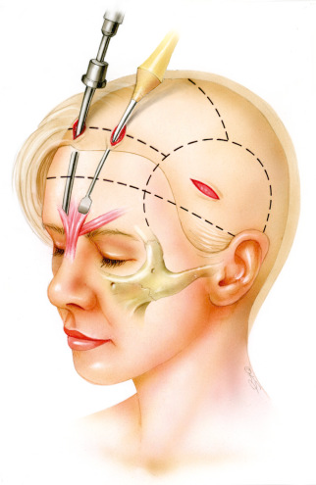
With an endoscopic facelift, you can achieve many of the same rejuvenating benefits of a traditional facelift, but the surgery is less invasive, and that means a shorter, easier recovery time afterwards. The use of an endoscope (a long, thin tube with a lighted camera in the end) allows our experienced cosmetic surgeons to accurately view hard to reach areas below the skin without having to make large, extended incisions. Only tiny incisions are made using the natural creases of your skin to lessen the appearance of any incision lines or scars. Targeting the central third of a person’s face, an endoscopic facelift is especially effective in treating issues such as frown lines and facial folds near the nose and mouth.
Instructions for better Face Lift Surgery
The following instructions are general information to be followed before and after a Face Lift procedure: Pre-Operation: ·Avoid aspirin, ibuprofen (Advil, Motrin), naproxen (Aleve), and other non-steroidal anti-inflammatory medications), Vitamin E, herbal supplements or any medications containing these compounds for 2 weeks before surgery. Acetaminophen (Tylenol or generic equivalent) and a multivitamin are fine. ·Avoid hair coloring, perms, or other hair treatments for 2 weeks before and 4 weeks after surgery ·Refrain from smoking 2 weeks before and 2 weeks after surgery. Nicotine and tobacco smoke delay healing and can result in scarring. This is the perfect time to give up the habit. ·Avoid sun damage 2 weeks before surgery. We recommend wearing a SPF 30 or higher. ·Do not eat or drink anything, including water, after midnight the night before your surgery. ·Arrange for someone to take you home from the hospital. You will not be allowed to drive or leave alone. Arrange for someone to stay with you for the first 24 hours after surgery. Post-Operation: ·Iced gauze pads (gauze pads dipped in ice water and wrung out) should be applied for the first 48 hours to minimize swelling and discoloration. ·Severe pain or swelling, especially if greater on one side, is uncommon—if you experience this notify us. ·You may wash your face but keep the dressing dry. ·Keep your head elevated to minimize swelling. A recliner works well or adding an extra pillow on your bed is adequate. ·Leave bandages on until we remove them. A lighter dressing will replace the original one. You will be instructed to remove the dressing 2 days later. You may shower and wash your hair once the dressing is removed. ·Our office will supply you with a supportive elastic facial sling which you will need to wear day and night for the first 7 days after the dressing is removed. You will need to wear it at night for the following 1-2 weeks. ·Don’t be concerned if the eyes, cheeks, and neck show some swelling or bruise discoloration after removal of the dressing – this usually resolves within 2 weeks. In certain patients, it may require six months for all swelling to completely subside. ·Apply a thin layer of Vaseline ointment to all incisions 3 times a day once dressings have been removed and continue until 2 days after the sutures are removed. ·Baby Shampoo or a clarifying shampoo works best to remove the ointment from your hair and scalp. ·Avoid foods requiring prolonged chewing and avoid excessive facial movements for 1 week. ·Brush teeth gently with a soft toothbrush only. Avoid manipulation of upper lip and cheeks. You may have difficulty opening your mouth wide or turning your head. As healing takes place and swelling subsides this will improve. In the meantime, avoid any stretching facial movements. ·Avoid extreme physical activity including athletic activities and intercourse. You may resume light walking 3 days after surgery. Aerobic exercise, weight training, heavy lifting, and straining may be gradually resumed 3 weeks after surgery. ·Absolutely avoid sun exposure, sun lamps, or tanning beds for 6 weeks after surgery. Heat may cause your face to swell. We recommend wearing a SPF 30 or higher. ·Take only medications prescribed by your doctor. You will receive prescriptions for pain medication and an antibiotic. The pain medication along with reduction in physical activity may cause constipation. ·Makeup may be used 5-7 days after surgery (except on the incisions). Make-up may be applied on the incisions 2 days after the sutures are removed. Average Length of Stay 10 Days Length of Stay in Hospital 1-2 Days Operation Duration 2-5 Hours Anesthesia General Anesthesia Recovery Duration 2 Weeks
Request Consultation